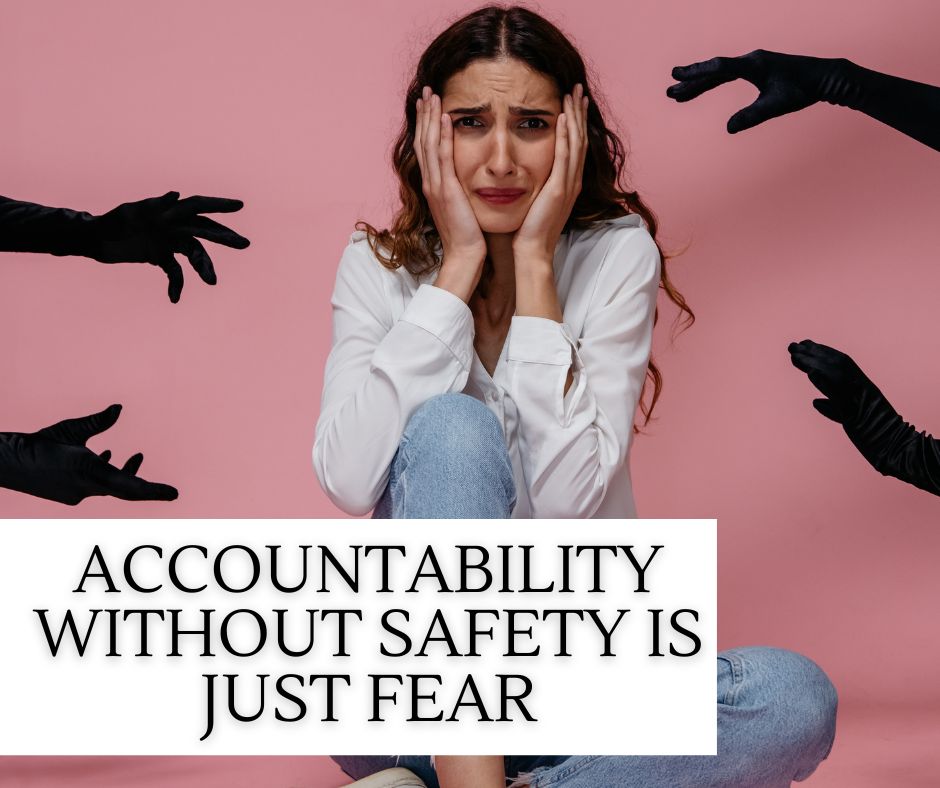

We often assume that accountability comes from holding people to high standards, being direct, or cracking down when results slip. But if that’s the only tool in your leadership toolkit, you’ll likely create a culture of fear, not ownership.
Here’s the truth: Psychological safety is the fuel that drives real accountability.
What Is Psychological Safety?
Psychological safety is the belief that you can speak up, make mistakes, and ask questions without fear of humiliation or retaliation. It doesn’t mean avoiding tough conversations — it means creating an environment where people feel safe enough to engage in them.
The Link Between Safety and Accountability
When team members don’t feel safe, they go into protection mode:
- They avoid risks.
- They don’t admit mistakes.
- They hide problems or blame others.
In contrast, when psychological safety is high, people take ownership:
- They speak up when something’s off.
- They share new ideas without fear.
- They’re more likely to accept responsibility, because it’s safe to do so.
This is where accountability thrives — not through fear, but through trust.

Common Mistakes Leaders Make
Using blame instead of curiosity
When something goes wrong, it’s easy to point fingers. But asking, “What got in the way?” opens the door to learning.
Rewarding silence
If your team stays quiet in meetings or never pushes back, that’s not a sign of alignment — it’s a red flag.
Avoiding feedback conversations
You can’t build accountability without feedback. But if psychological safety is low, feedback feels like an attack, not support.
Creating Safety and Accountability
It’s not either/or. Great leaders build both.
Here’s how:
- Model vulnerability: Admit your own mistakes and talk about what you’ve learned.
- Invite feedback: Ask your team how your behavior impacts them.
- Set clear expectations: Safety doesn’t mean lowering the bar — it means helping people feel safe to reach it.
- Stay curious: Lead with questions, not conclusions.
Final Thought
Psychological safety isn’t a “nice-to-have.” It’s the foundation for high performance. If you want a team that takes ownership, speaks up, and holds each other to a high standard — build a culture where it’s safe to do so.
Leave a Reply